Stop Staring at the Fridge: A Grab-and-Describe Reset Ritual for Weeknight Dinners
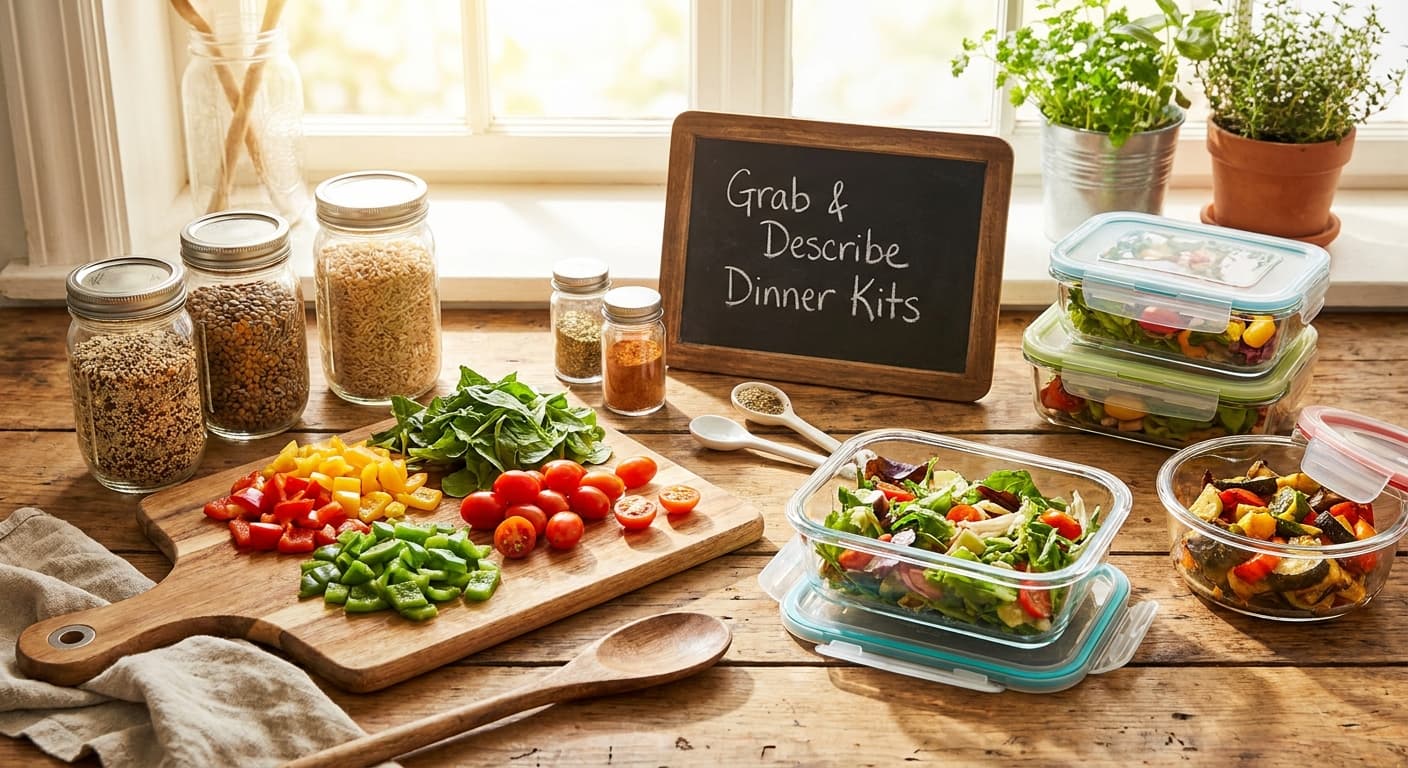
Stop Staring at the Fridge: A Grab-and-Describe Reset Ritual for Weeknight Dinners
Feeling stuck in the 6 p.m. paralysis—fridge open, phone out, scrolling recipes you’ll never start?
What if weeknight dinner stopped being a fresh “what should we eat today?” decision…and instead became a quick, repeatable 15‑minute ritual that turns your fridge, freezer, and pantry into an easy grab-and-describe dinner system?
That’s exactly the idea behind a Sunday (or midweek) reset ritual: a short, structured “scan” that turns the random contents of your kitchen into a simple, visual dinner menu—plus a rotating set of modular prep kits that keep things fresh without extra thought.
Let’s break down how to turn your kitchen into a grab-and-describe machine.
The Problem with “Dinner Decisions”
Most weeknight stress doesn’t come from cooking, it’s from decisions.
You’ve:
- Opened 4 tabs on a recipe app
- Started a recipe from a friend, then didn’t have the time
- Ended up ordering in “just this once” (again)
You don’t need more fancy recipes. You need a repeatable, low-spoons way to see your contents, map them into meals on autopilot, and catch leftovers before they go bad.
Shift: From “What Should We Cook?” to “What Can I Grab and Describe?”
Think less “plan a menu,” more describe what’s possible right now.
We’ll call this the Grab & Describe Protocol:
- Grab: physically look at the fridge, freezer, pantry.
- Describe in plain language: proteins, carbs, veggies, cans/jars, leftovers.
- Match items into simple modular “prep kits” (more on these below).
The goal is to build a visual “menu board” you can see at a glance—not a spreadsheet.
The 15-Minute Reset Ritual (Do This Weekly)
Pick a low-stress time (Sunday, or any evening midweek) and set a 15-minute timer. You’ll do three things:
- Fridge/Freezer/Pantry Scan – Quick visual check of zones.
- Leftover & Near-Expiry Catch – Identify items that must be used.
- Modular Kit Assignment – Build 3–4 grab-and-describe prep kits for the week.
That’s it.
Step 1: Quick Scan – Categorize, Don’t Catalog
Go zone by zone and sort items into four buckets:
Fridge Scan (3–4 min)
Grab and describe with simple phrases, not an inventory:
- “Leftover chicken + marinara near expiry”
- “Cooked grains, wilting greens, stale tortillas”
- “Bacon, eggs, veggies for omelets, berries for desserts”
Freezer Scan (2–3 min)
Focus on:
- Proteins (chicken, fish, beef, shrimp)
- Blends and pre-made mixes (smoothie refoods, pre-made mixes)
- Soups, stews, ends of jars, bread crumbs
Pantry Can & Jar Scan (2–3 min)
Look for:
- Beans, rice, pasta bulking items
- Canned tomatoes, broth, coconut milk
- Jars: Olives, capers, pickles, sauces
Step 2: Leftover & Near-Expiry Catch
This is where fatigue and bottlenecks start.
Build a micro “use-first” pile:
- Leftover proteins (grilled chicken, cooked beef, steamed veggies)
- Near-expiring dairy (yogurt, mozzarella, sour cream)
- Softening herbs, wilted greens, overripe bananas
Ask, “What can I cook with this in the next 48 hours?” instead of “What do I plan for 5 days?”
If you can’t use it within 2–3 days, move it into “Freezer Outpost” – freeze immediately when cool enough.
Step 3: Build Modular Prep Kits for the Week
Once you have your grab list, turn them into 3–4 Modular Prep Kits: flexible building blocks you combine in different ways across the week.
The 4 Core Prep Kits
Think of them as base units that can be mixed. For this example, let’s use the following four systems (you can rotate these based on your family’s tastes):
- Sheet-Pan Combo: Roasted veggies + protein.
- Skillet & Grain Bowl: Sautéed protein/veggies + rice/quinoa + sauce.
- Dump-and-Heat Stew or Curry: Canned beans, tomatoes, spices.
- Wraps & Mixed Greens Bowl: Tortillas + beans + prepped salads + toppings.
How to Build a Prep Kit
Using one protein, describe how it could become a kit. For example, “2 chicken breasts + marinara + frozen veggies + rice” can become a “Chicken Veggie Sheet-Pan Combo” and “Skillet & Grain Bowl” in two moves.
Rotate through these four systems across the week. Don’t over-plan exact days—just keep them as flexible possibilities.
Closing Loop: Friction-Free Rotation & Catch-Up Routines
Even with prep kits, things happen:
- A trip, a busy night, ingredients expire, or you’re simply wiped out.
Add these catch-up routines:
- Leftover Flip Day: midweek mini-residual kit stir-fry or grain bowl from earlier prep.
- Freezer Bridge Outpost: pre-portions of proteins/veggies to grab on overwhelmed nights.
This keeps your evenings easy, cheap, and spontaneous.
Call it the “easy island” in your kitchen, where the decision is done.
Take Action: Your 15-Minute Reset This Week
This is the low-lift, high-reward strategy that makes weeknight stress disappear.
- Set aside 15 minutes this Sunday or midweek.
- Tap the Grab & Describe directions above.
- Build your Prep Jars, your Freezer Outpost, and rotation.
- Let weeknights follow themselves.
Now your only decision on a hectic Tuesday is which jar to open.
Enjoyed this post?
Get weekly meal planning tips delivered to your inbox.
Comments
Related Posts
View All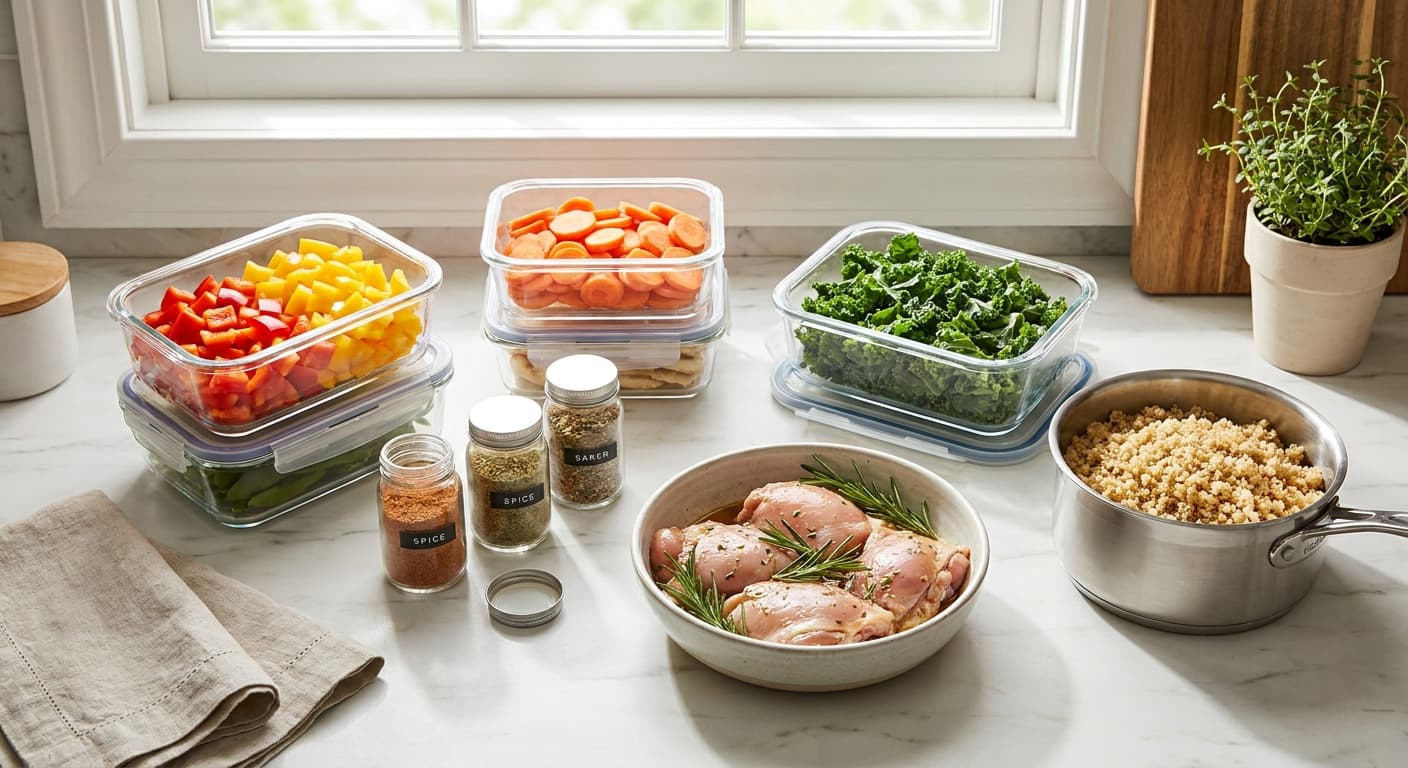
Sunday Ingredient Prep: Your Secret Weapon for Stress-Free Weeknight Dinners
Skip full batch cooking—just chop, marinate, and portion on Sunday to slash weeknight dinner stress and decision fatigue.
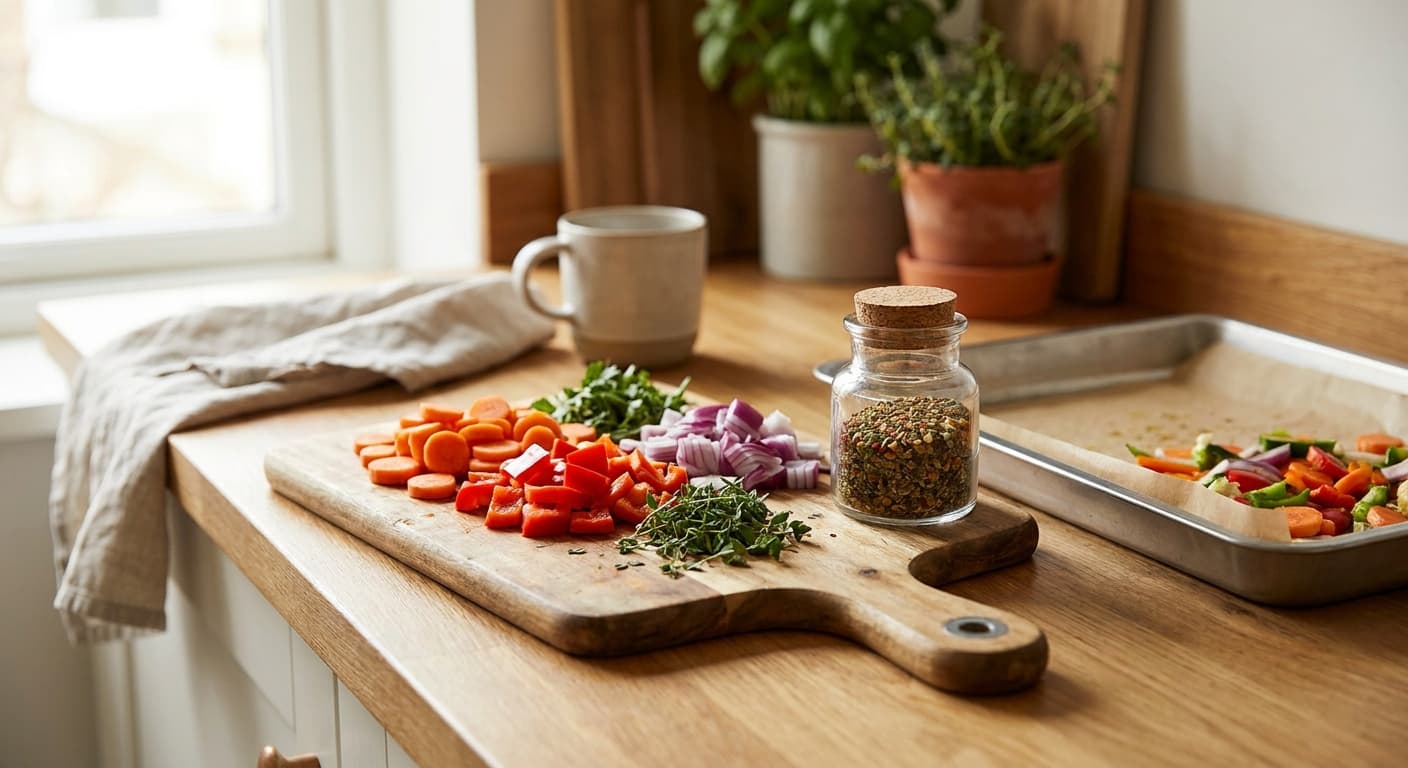
The 3-Part Framework That Makes Weeknight Dinner Decisions Disappear
Stop agonizing over what's for dinner. This simple 3-part framework eliminates decision fatigue and gets weeknight meals on the table fast.
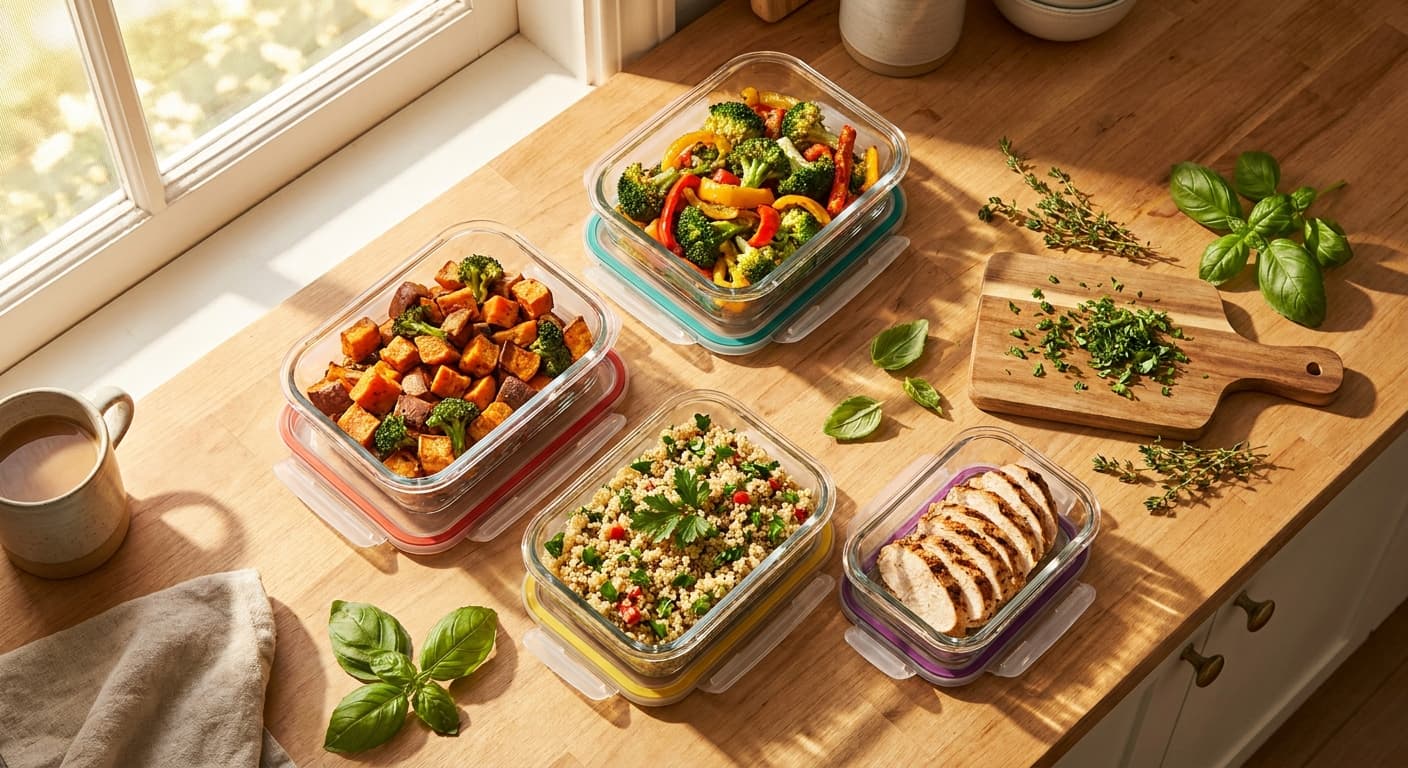
Meal Prep Tips for Busy Families: How to Feed Everyone Without Losing Your Mind
Practical meal prep strategies designed for families juggling picky eaters, packed schedules, and everyone's different dinner time.