Back to Blog
The 15-Minute Weeknight Dinner Engine: A Framework for Speed Without Chaos
weeknight dinners
meal prep
quick meals
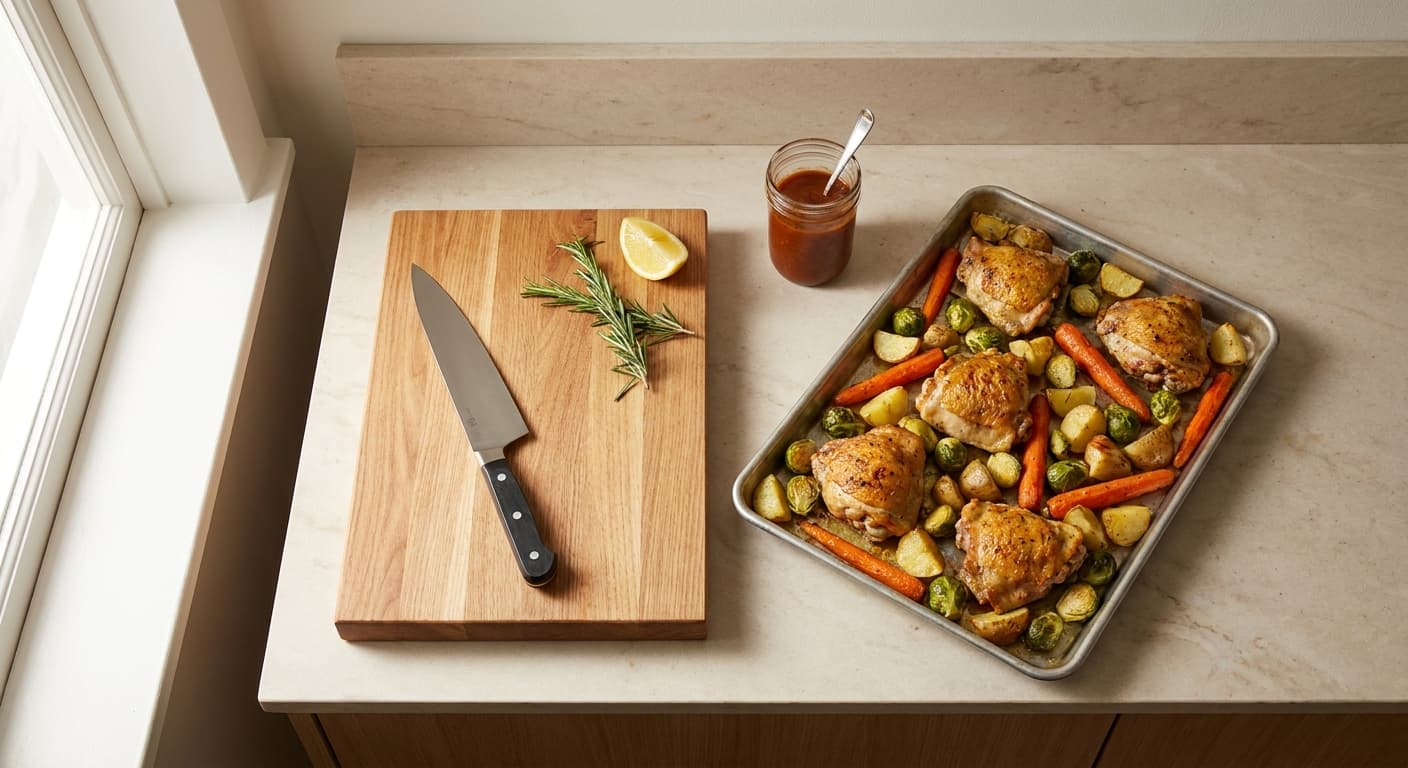
Every Monday through Friday, your day hits its most predictable crisis point: 5:45 PM. You're tired, maybe hungry, and the fridge stares back at you with a mix of leftovers and half-used ingredients. Dinner shouldn't feel like a second job.
But here's the secret: the best weeknight dinners aren't about elaborate meal plans or hours spent batch-cooking on Sundays. It's about building a system that prioritizes speed, simplicity, and sanity—no matter what's on hand.
This isn't a list of recipes. That comes later. This is the blueprint that makes any recipe possible in under 20 minutes.
Most of your dinner failure starts with a cluttered workspace. You lose time hunting for the colander, fumbling through drawers for the only decent knife, or wiping down a counter covered in yesterday's dishes.
Your best ally is a Two-Container Rule for prep:
Everything else? Move it. Clear the counter. Shove it in a cabinet, on a shelf, anywhere out of sight. When your workspace is lean, your speed multiplies. You move from prep to cooking without friction.
Protein is usually the time-skip that kills weeknight momentum. You're thawing chicken breasts for an hour, or the ground meat is still frozen.
Here are two protein shortcuts every cook should have in their back pocket:
The shortest distance between you and dinner is a protein that's ready when you are.
Vegetables often get paired with salads and elaborate roasting sessions. But on weeknights, you need the "unfussy" approach:
Decide which category your veggies fall into, and you skip the cooking step entirely—or dramatically shorten it.
A good sauce transforms leftovers, plain proteins, or frozen veggies into something special. But homemade sauces can feel like another prep burden.
Build your "sauce stations"—pre-mixed combinations you can grab and go:
One sauce station and ten minutes after work, and you've got instant cohesion on the plate.
Dishwashing is the silent killer of weeknight joy. The more pots and pans you use, the longer you linger in the kitchen after eating.
Adopt these principles:
Fewer dishes mean you're done faster and actually enjoy your evening.
Decision fatigue is real. You stand in front of the fridge, overwhelmed by options, and end up ordering takeout.
Use this quick decision tree:
Answer those three questions, and you've got a dinner concept in under 2 minutes. No recipe needed.
Leftovers aren't failures—they're ingredients waiting for a second act.
The goal isn't to eat the same thing twice. It's to transform it into something new with minimal effort.
Here's what a weeknight looks like with this framework:
That's 20 minutes from chaos to calm. No recipe, no stress, no takeout.
This framework isn't about perfection. It's about building habits that make dinner feel manageable, even on your busiest nights.
Start with one strategy this week. Maybe it's clearing your workspace, or stocking a sauce station. Small changes compound into a rhythm that feels effortless.
Because the best weeknight dinners aren't the ones that take the most time—they're the ones that take the least thought.
Get weekly meal planning tips delivered to your inbox.

Quick, stress‑free meal prep tricks to turn busy weeknights into effortless, tasty dinners.

Practical, actionable meal prep tips to get dinner on the table fast. From planning to batch cooking, reclaim your weeknights without the stress.

Tired of chaotic weeknights? Discover practical meal prep strategies to get dinner on the table fast without sacrificing flavor or nutrition.