Back to Blog
Budget-Friendly Batch Cooking: Your Complete Guide to Feeding the Family for Less
batch cooking
budget meals
meal planning
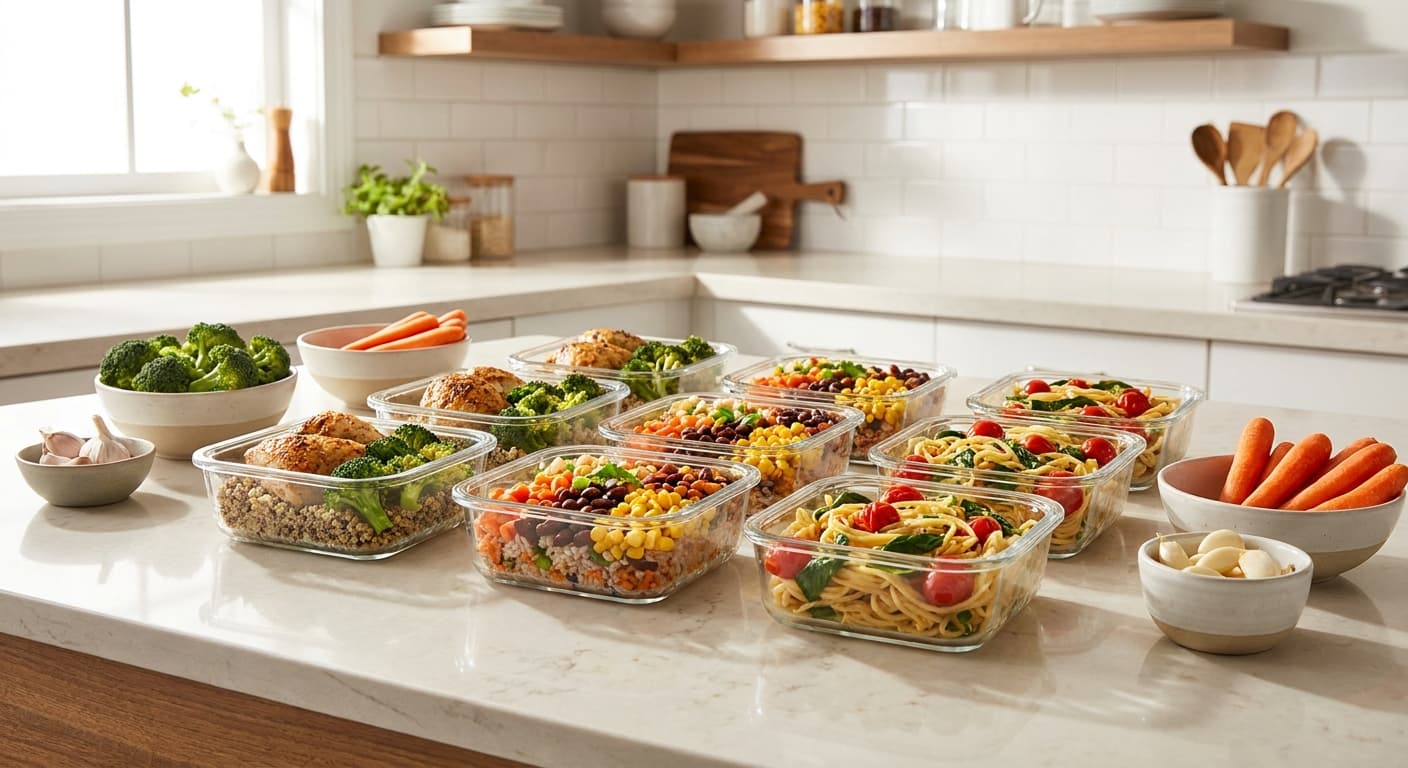
If you’ve ever stared into the fridge at 5:30 p.m. wondering what on earth to make for dinner—while your kids are already hangry and your energy is gone—you’re not alone. Batch cooking is one of the most powerful tools you can use to take back your evenings, stretch your grocery budget, and actually enjoy mealtime again.
This guide walks you through a practical, step‑-step approach to budget-friendly batch cooking that’s built for real families: flexible, not fussy, and focused on making the most of every ingredient.
Batch cooking isn’t just “making a lot of food.” It’s a strategy:
Lower cost per meal – Buying in bulk and using ingredients across multiple dishes reduces waste and unit cost.
Less impulse spending – When you have ready-made meals, you’re less likely to order takeout.
Fewer forgotten ingredients – Planning around a core set of ingredients means less food spoiling in the back of the fridge.
Time savings – A few focused hours in the kitchen can cover most of your week’s dinners.
The key is to plan meals that share ingredients, so you’re not buying 15 different things for 5 completely different recipes.
Before you plan a single recipe, get clear on what you’re working with.
Weekly food budget: Decide how much you want to spend on groceries for the week.
Meals to cover: Are you batching just dinners? Lunches too? Breakfasts?
Family preferences: Note any allergies, strong dislikes, and “must-have” meals so you’re not cooking food no one will eat.
Write this down—on paper or in a notes app—so you can refer back to it while planning.
Instead of planning 5 random recipes, build your week around 2–3 base ingredients that you’ll use in multiple ways. This is the secret to keeping costs low and waste minimal.
Examples of base ingredients:
Chicken thighs (cheaper and more flavorful than breasts)
Ground turkey or beef
Beans and lentils (dried or canned)
Rice, pasta, or potatoes
Seasonal vegetables (whatever’s on sale)
Pick 2–3 of these and then choose recipes that use them in different forms.
Here’s a sample plan using chicken thighs, rice, and broccoli:
Meal 1 – Sheet Pan Chicken & Broccoli
Roast chicken thighs and broccoli with garlic, olive oil, and spices.
Meal 2 – Chicken Fried Rice
Use leftover chicken and rice with soy sauce, eggs, and any extra veggies.
Meal 3 – Chicken & Broccoli Pasta
Toss shredded chicken and broccoli with pasta and a simple sauce.
Meal 4 – Chicken Soup or Stew
Simmer bones or extra meat with broth, carrots, celery, and rice or noodles.
Meal 5 – “Clean Out the Fridge” Bowls
Combine any remaining protein, grains, and veggies into bowls with a sauce or dressing.
You’re essentially cooking once and eating multiple ways.
Go through each recipe and combine ingredients into one list. Look for:
Overlap: Where can you use the same vegetable, grain, or protein in multiple meals?
Pantry staples: Salt, pepper, oil, spices, broth, canned tomatoes, etc.
What you already have: Check your fridge, freezer, and pantry before buying more.
A focused list helps you:
Avoid impulse buys
Stick to your budget
Reduce the chance of food going unused
You don’t have to cook every meal from scratch in one marathon session. Instead, prep in layers:
Prep day (1–2 hours)
Assembly day (30–60 minutes, midweek)
This approach keeps the work manageable and the food fresher.
Batch cooking fails when food sits in the back of the fridge and goes bad. Make it easy to grab and go:
Use clear containers so you can see what’s inside.
Label with dates and plan to eat the most perishable meals first.
Freeze extras like soups, sauces, and cooked meat in portion-sized bags.
Keep a “use first” shelf in the fridge for items that need to be eaten soon.
One of the biggest complaints about batch cooking is “I’m tired of eating the same thing.” You can avoid this by changing the flavor profile, not the ingredients:
Same chicken, different sauces: BBQ one night, teriyaki another, creamy garlic another.
Same base, different toppings: Rice bowls with different sauces, veggies, and proteins.
Spice blends: Italian seasoning vs. Mexican vs. Asian-inspired flavors.
This keeps meals interesting without requiring a completely new set of ingredients.
After your first week of batch cooking, ask:
Which meals did your family actually eat?
What went to waste?
What took too long to prep?
What was the best value for the money?
Use those answers to tweak your next plan. Over time, you’ll build a rotation of budget-friendly batch meals that fit your family’s tastes and schedule.
Here’s a simple example using inexpensive staples:
Proteins: Chicken thighs, ground turkey, eggs, black beans
Carbs: Rice, pasta, potatoes
Veggies: Carrots, onions, broccoli, frozen peas, canned tomatoes
Flavor boosters: Garlic, soy sauce, chili powder, Italian seasoning, broth
Possible meals:
Chili with ground turkey and beans
Chicken and veggie stir-fry over rice
Pasta with simple tomato sauce and hidden veggies
Breakfast-for-dinner egg and potato hash
Bean and rice bowls with different toppings
You’re not eating the same thing every night—you’re eating smart.
Budget-friendly batch cooking isn’t about perfection. It’s about progress: fewer last-minute scrambles, less food thrown away, and more money left in your account at the end of the week.
Start small. Pick one or two meals to batch this week, use overlapping ingredients, and see how it feels. Once you get the rhythm, you’ll wonder how you ever lived without it.
Get weekly meal planning tips delivered to your inbox.

Quick, stress‑free meal prep tricks to turn busy weeknights into effortless, tasty dinners.

Practical, actionable meal prep tips to get dinner on the table fast. From planning to batch cooking, reclaim your weeknights without the stress.

Tired of chaotic weeknights? Discover practical meal prep strategies to get dinner on the table fast without sacrificing flavor or nutrition.