Back to Blog
The Family Meal Prep Operating System: A Weekly Rhythm That Actually Works
meal prep
busy families
weekly meal planning
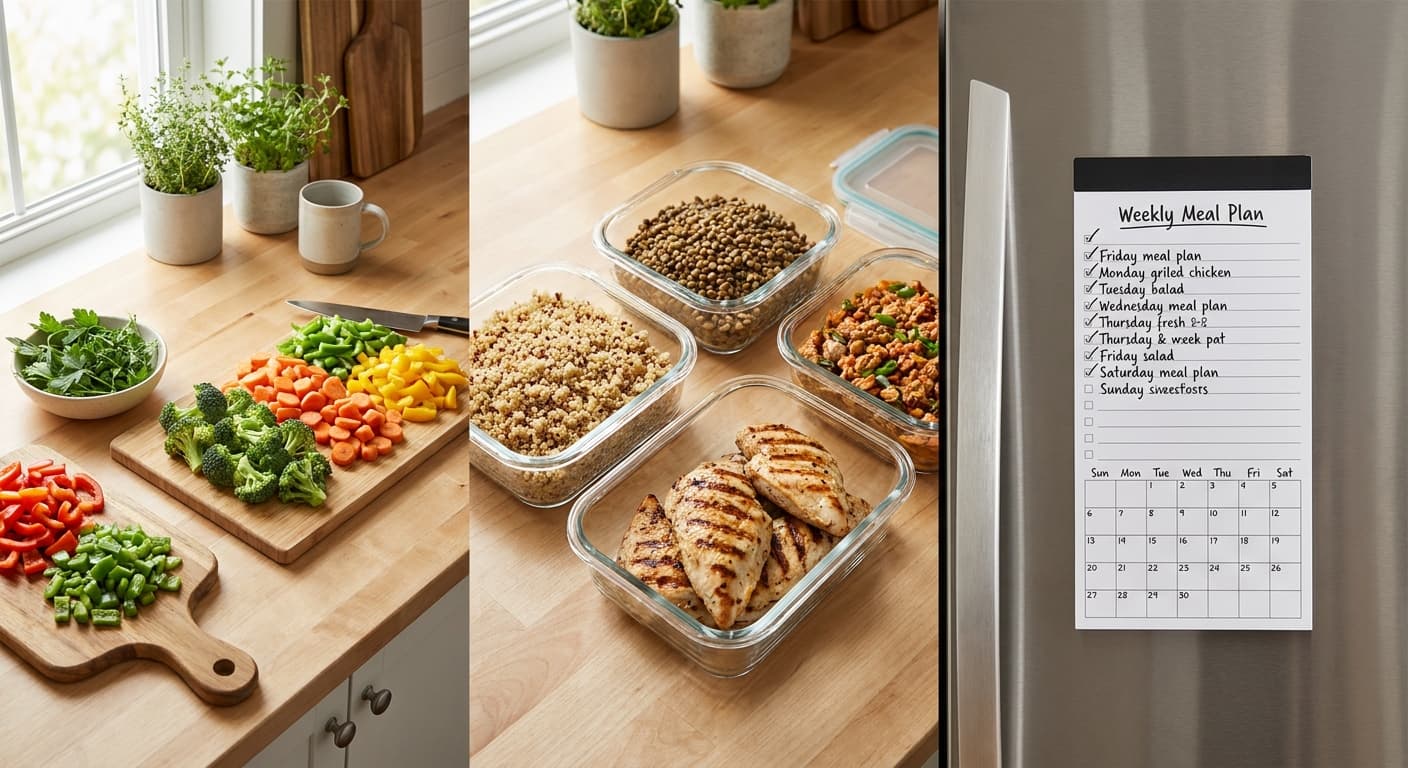
If you’re a busy parent who’s tried meal prep and given up, here’s why:
Most advice treats meal prep like a single Sunday experiment—a bulk cook of chicken and rice you pretend you’ll eat by Thursday. But real families don’t live in a single container of grilled chicken. They live in overlapping schedules, hangry kids, sports practices, and the sudden declaration of “I don’t want that anymore” from a six-year-old who loved it last week.
What you really need isn’t more recipes. It’s a weekly operating rhythm for meals—one that coordinates the needs of multiple humans with different tastes, activities, and energy levels, and that runs on repeat.
This article will help you build that system: a simple, repeatable daily and weekly flow you can tailor to your family. Once it’s in place, you’ll stop asking “What’s for dinner?” and start moving through your week with calm confidence instead of last-minute chaos.
Traditional meal prep says: spend 2–4 hours on Sunday cooking a bunch of food.
Family meal ops says: spend 10–30 minutes a day on coordinating food so that dinner, snacks, and lunches come together smoothly—without you turning into a short-order cook.
Instead of focusing on recipes in isolation, you’ll think in three layers:
Once you’re working with those three layers, everything from school lunches to post-soccer recovery snacks becomes part of one unified system instead of a series of midnight Pinterest spirals.
Before you open a single recipe, take 10 minutes to look at the week ahead as the logistics puzzle it actually is.
Sit down with the family calendar (paper, app, or the scribble on the fridge) and tag each day by intensity:
Color-code them however works for you. Now you can match meal types to days instead of hoping a 45-minute recipe will somehow materialize on a 25-minute night.
Rather than deciding exactly what you’ll cook each night, assign a general approach:
You’re not locking yourself in; you’re giving your future self a set of guardrails. On a late night, you won’t waste time considering whether that slow braise is realistic. You’ll go straight to the “rewarm bucket.”
Once you’ve mapped the week by intensity and meal posture, you can design a rhythm that spreads prep across small windows instead of dumping everything on Sunday.
Here’s a template you can tweak to fit your family size, schedule, and tolerance for leftovers.
The goal here is not to cook every meal. It’s to remove friction during the week.
Aim to get most of these done:
If that feels like a lot, start with:
Use this window to:
This short session keeps you from feeling like everything is a scramble by midweek.
This is the most important session for busy families. By Wednesday, you’re running low and fatigue is creeping in.
Use this time to:
If you do nothing else, do this:
Pick a base (rice, noodles, pita, tortillas, greens) and a leftover protein, then add a sauce from your fridge. Instant new meal with the mental load of basically zero.
Set yourself up for a calm weekend (or at least a less-brutal one):
This step is what turns your meal prep from a weekly panic into a system you can actually improve over time.
The real challenge in families isn’t cooking the food; it’s making sure everyone has something they’ll eat without you making five separate dinners.
The Flex-Friendly Prep framework helps you align different needs without losing your mind.
Have a quick family meeting and ask (or observe):
Write down 3–4 items per person in a shared note. That becomes your prep radar. If three out of four family members will eat “chicken + rice + black beans,” that’s a strong candidate for your core weekly components.
Instead of one monolithic dish, cook a neutral base and let people customize:
This turns dinner from a battleground into a choose-your-own-adventure. Kids can assemble their own bowls, adults can make theirs more interesting, and nobody feels like they’re being punished for having preferences.
Give yourself permission to have 3–5 meals that are automatic yeses, even if they’re boring to you. Think:
On nights when nothing is working emotionally or logistically, you go straight to the safe list. It’s not failure; it’s emergency protocol.
Turn the ideas above into a physical checklist you can actually keep on the fridge or in your notes app. Here’s a starter you can adapt:
Weekly Family Meal Ops Checklist (Tech-Light)
Calendar Scan (Sunday or Monday morning)
Staples Check
Prep Windows (adjust times to your reality)
Family Food Map
Keep the checklist somewhere visible. It’s okay if you don’t hit every bullet every week—the point is to give yourself a repeatable structure, not a perfection mandate.
Even with a system in place, you’ll still have rough nights. A few small habits help:
Some weeks, the rhythm collapses. You’re sick, traveling, or the car breaks down. Have an emergency plan:
The existence of a system means you can deliberately fall back to minimum viable meals without guilt. That’s not giving up; that’s using your emergency protocol like a pro.
Your first week with this system will feel a little clunky. You’ll remember things late, under-chop or over-chop, and probably still have one night where dinner is cereal. That’s normal.
To make it stick:
Over time, these rhythms will quietly take over. You’ll notice that instead of dreading the question “What’s for dinner?” you’ll have a ready answer—and half the work will already be done before the question is even asked.
Get weekly meal planning tips delivered to your inbox.

Quick, stress‑free meal prep tricks to turn busy weeknights into effortless, tasty dinners.

Practical, actionable meal prep tips to get dinner on the table fast. From planning to batch cooking, reclaim your weeknights without the stress.

Tired of chaotic weeknights? Discover practical meal prep strategies to get dinner on the table fast without sacrificing flavor or nutrition.