The 'Minimum Viable Prep' Method: How Busy Families Can Get 4 Dinners on the Table With One Short Sunday Session
The 'Minimum Viable Prep' Method: How Busy Families Can Get 4 Dinners on the Table With One Short Sunday Session
Let's be honest — most meal prep advice was written by someone who has a lot more free time than you do.
The Instagram-perfect Sunday where you roast three sheet pans of vegetables, portion out seven containers of quinoa, and label everything with a label maker? That's a fantasy for most families juggling soccer practice, homework battles, and the general chaos of weekday evenings.
But here's what I've learned after years of helping real families figure out dinner: you don't need to prep everything. You need to prep the right things.
That's where the Minimum Viable Prep framework comes in. It's the smallest set of Sunday actions that reliably produces 3–4 weeknight dinners — without turning your kitchen into a production line.
Why 'Minimum Viable Prep' Works When Full Meal Prep Fails
Traditional meal prep asks you to do all the work upfront. Minimum Viable Prep asks a different question: What's the smallest amount of effort on Sunday that removes the most friction on Wednesday at 5:47 PM?
The answer usually isn't cooking full meals. It's removing the decision points and bottlenecks that slow you down when you're tired and hungry.
Think of it this way: the hardest part of weeknight cooking isn't the cooking itself. It's standing in front of the fridge at 6 PM wondering what to make, realizing you're missing a key ingredient, and defaulting to takeout.
Minimum Viable Prep solves that.
The 4 Core Sunday Actions (45–60 Minutes Total)
Here's the framework. You don't need to do more than these four things:
1. Pick Your 3–4 Dinner Anchors
Choose 3–4 meals for the week. Not 7. Not 5 with elaborate sides. Just 3–4 dinners that your family will actually eat.
The rule: At least two of these should share an ingredient. This reduces waste and simplifies your shopping list.
Example week:
- Sheet pan chicken thighs with roasted vegetables
- Chicken quesadillas (uses leftover chicken)
- Pasta with marinara and a simple side salad
- Breakfast-for-dinner (eggs, toast, fruit)
See how the chicken does double duty? That's intentional.
2. Do the 'Bottleneck Prep' (Not the Full Prep)
This is where most people go wrong. They try to cook everything. Instead, identify the one or two steps that take the longest or feel the most overwhelming on a weeknight — and do only those.
Common bottlenecks:
- Washing and chopping vegetables (nobody wants to do this after a long day)
- Cooking a protein (grilling chicken, browning ground meat)
- Making a sauce or dressing (the thing that makes a meal feel "done")
- Cooking a grain (rice, quinoa, pasta)
For the example week above, your bottleneck prep might be:
- Roast a tray of chicken thighs (you'll eat some Sunday, save the rest for quesadillas)
- Wash and chop vegetables for the sheet pan dinner and the salad
- Cook a batch of rice
That's it. You're not assembling full meals. You're just removing the slowest steps.
3. Write Your Daily Decision Flow
This is the secret weapon, and almost nobody does it.
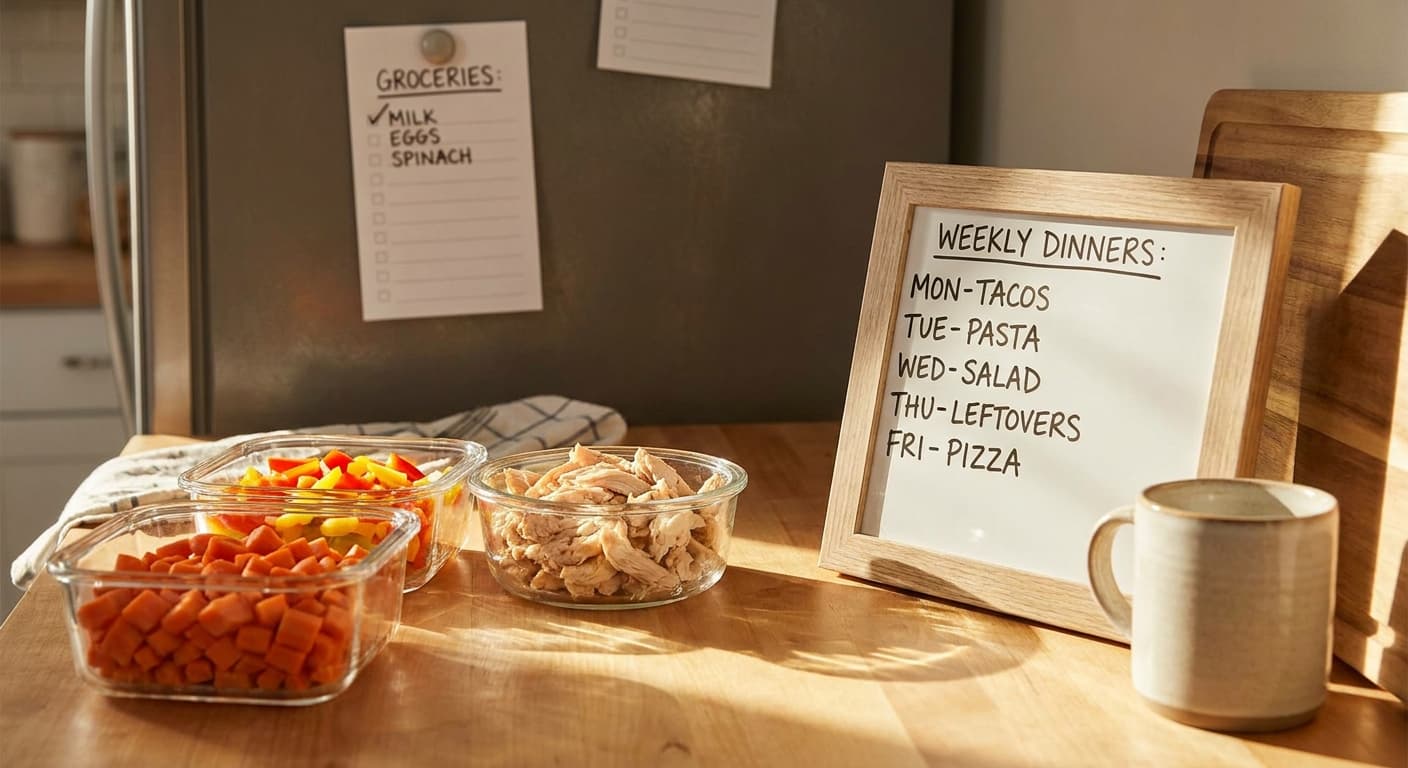
On a sticky note or a small whiteboard on your fridge, write a simple decision tree for each weeknight:
MON: Sheet pan chicken + roasted veggies (20 min)
TUES: Chicken quesadillas + salsa (10 min)
WED: Pasta night (15 min)
THURS: Breakfast for dinner (10 min)
The 15-minute daily decision flow works like this:
- 5 minutes on Sunday: Assign meals to days based on your family's schedule (busy night = easiest meal)
- 2 minutes each evening: Check what's thawed, glance at the plan
- 8 minutes of actual cooking: Because the hard part is already done
No standing in front of the fridge. No "what do you want to eat?" negotiations with kids. The decision is already made.
4. Set Up Your 'Emergency Backup'
Every week, have one meal that requires almost zero effort. This is your safety net for the night everything falls apart.
Good emergency backups:
- Frozen dumplings or potstickers with soy sauce and frozen peas
- Canned soup with grilled cheese
- Frozen pizza with a bagged salad dumped on the side
- Scrambled eggs and toast (yes, really)
Having this planned in advance means you won't feel like you've "failed" at meal prep. You planned for chaos. That's smart, not lazy.
Your Printable Sunday Checklist
Here's your grab-and-go checklist. Print it, stick it on the fridge, and run through it every Sunday:
MINIMUM VIABLE PREP — SUNDAY CHECKLIST
- Choose 3–4 dinner anchors for the week
- Check the calendar — which nights are busy? Assign easiest meals to those nights
- Write the week's dinner plan on the fridge
- Grocery shop (or order pickup) based on the plan
- Identify your bottleneck steps (chopping? cooking protein? making sauce?)
- Do ONLY the bottleneck prep (set a timer — 45 min max)
- Confirm your emergency backup is stocked
- Set out tomorrow's protein to thaw (if frozen)
That's the whole system. Eight checkboxes. Under an hour.
A Few Things I've Learned the Hard Way
Don't prep meals your family won't eat. I once spent a Sunday making five containers of a beautiful grain bowl. My kids looked at it like I'd served them a science experiment. Prep foods you know they'll actually consume.
Batch cooking ≠ meal prep. Cooking a big pot of chili is great. But you don't need to portion it into individual containers with labels and dates. Sometimes "big pot in the fridge" is the right level of prep.
Your plan will change. And that's fine. Swap Tuesday and Thursday. Turn Wednesday's pasta into Thursday's lunch. The framework is flexible — that's the whole point.
Start with just two dinners. If 3–4 feels like too much, start with two. Build the habit first, then expand.
The Real Goal Isn't Perfect Meals
The real goal is that your family eats something homemade most nights, you don't spend your entire Sunday in the kitchen, and you stop feeling guilty about the nights you order pizza.
Minimum Viable Prep gives you a system that works with your real life instead of against it. And honestly? That's worth more than a fridge full of perfectly portioned containers.
Now go set a timer for 45 minutes this Sunday and see what happens. I think you'll be surprised.
Enjoyed this post?
Get weekly meal planning tips delivered to your inbox.
Comments
Related Posts
View All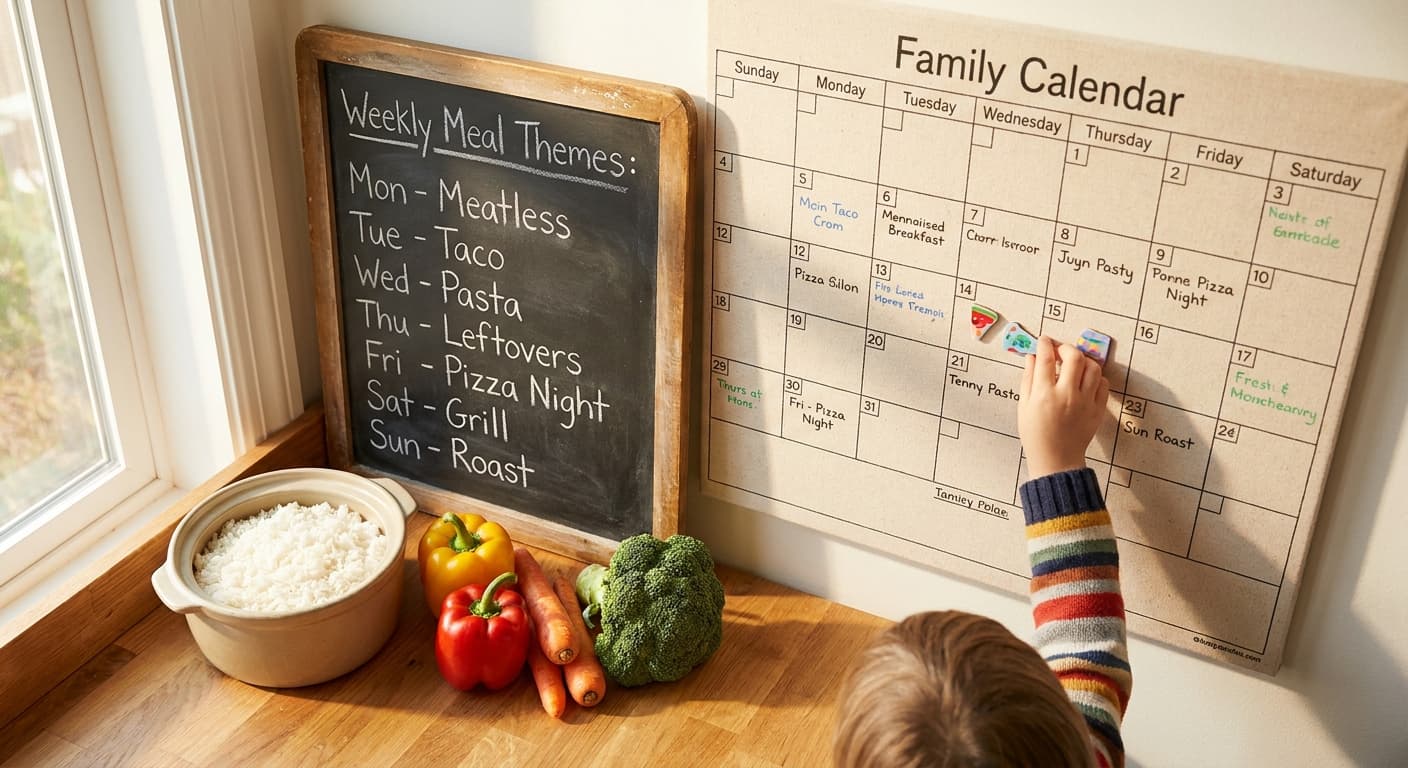
The Weekly Operating System: Meal Prep for Families Who Are Already Overwhelmed
Forget perfect meal prep. Learn to build a flexible weekly system that reduces decision fatigue and keeps your family fed—even on chaotic days.
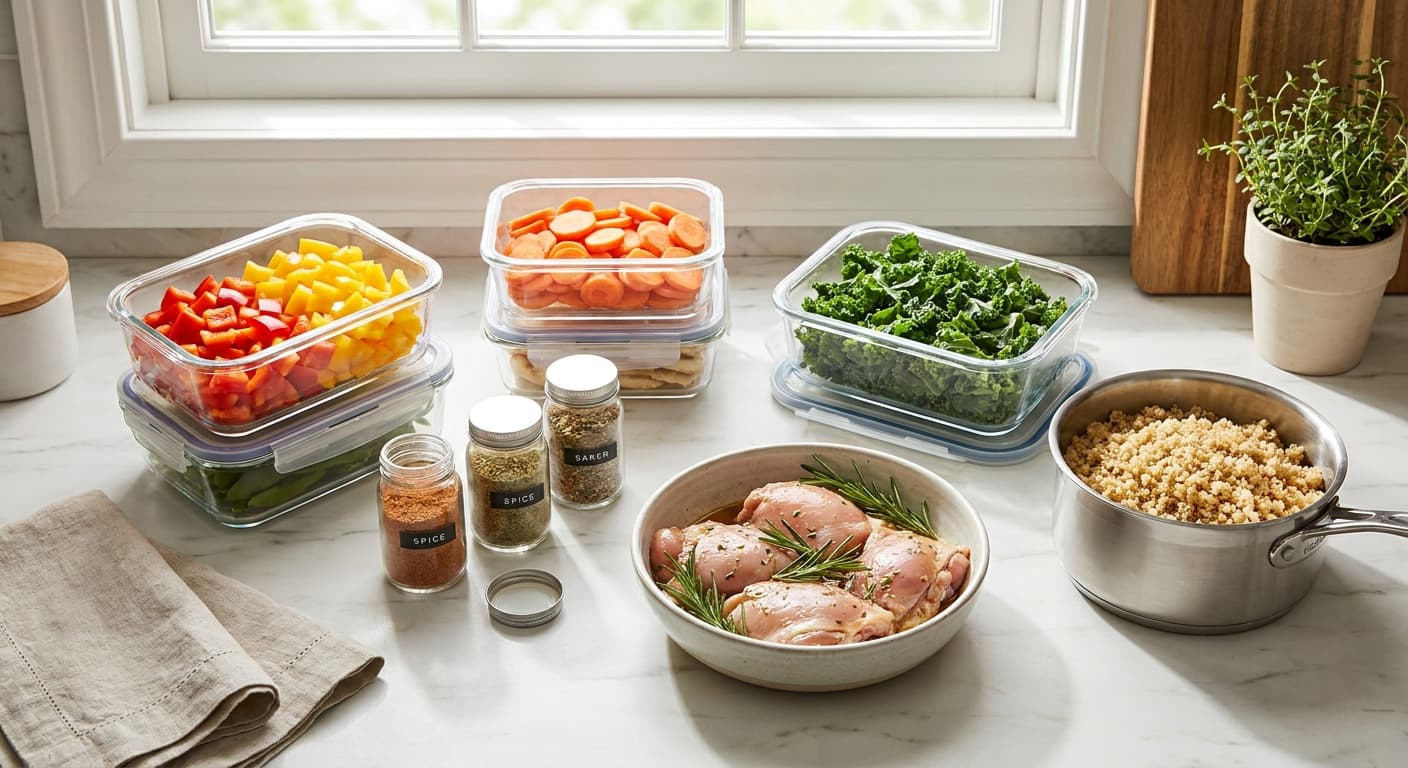
Sunday Ingredient Prep: Your Secret Weapon for Stress-Free Weeknight Dinners
Skip full batch cooking—just chop, marinate, and portion on Sunday to slash weeknight dinner stress and decision fatigue.
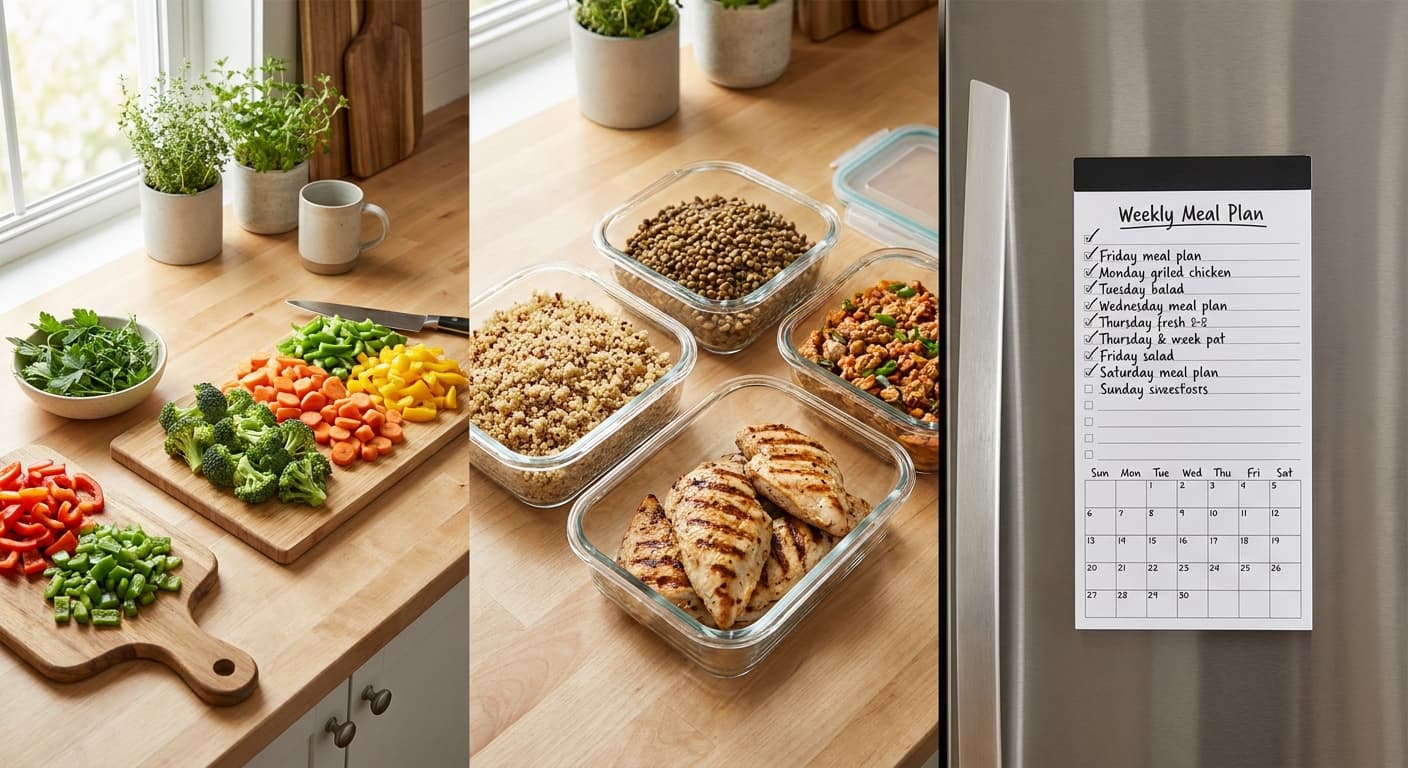
The Family Meal Prep Operating System: A Weekly Rhythm That Actually Works
Stop prepping recipes and start building a repeatable weekly system. Learn the framework that turns chaotic family dinners into a calm, coordinated rhythm.