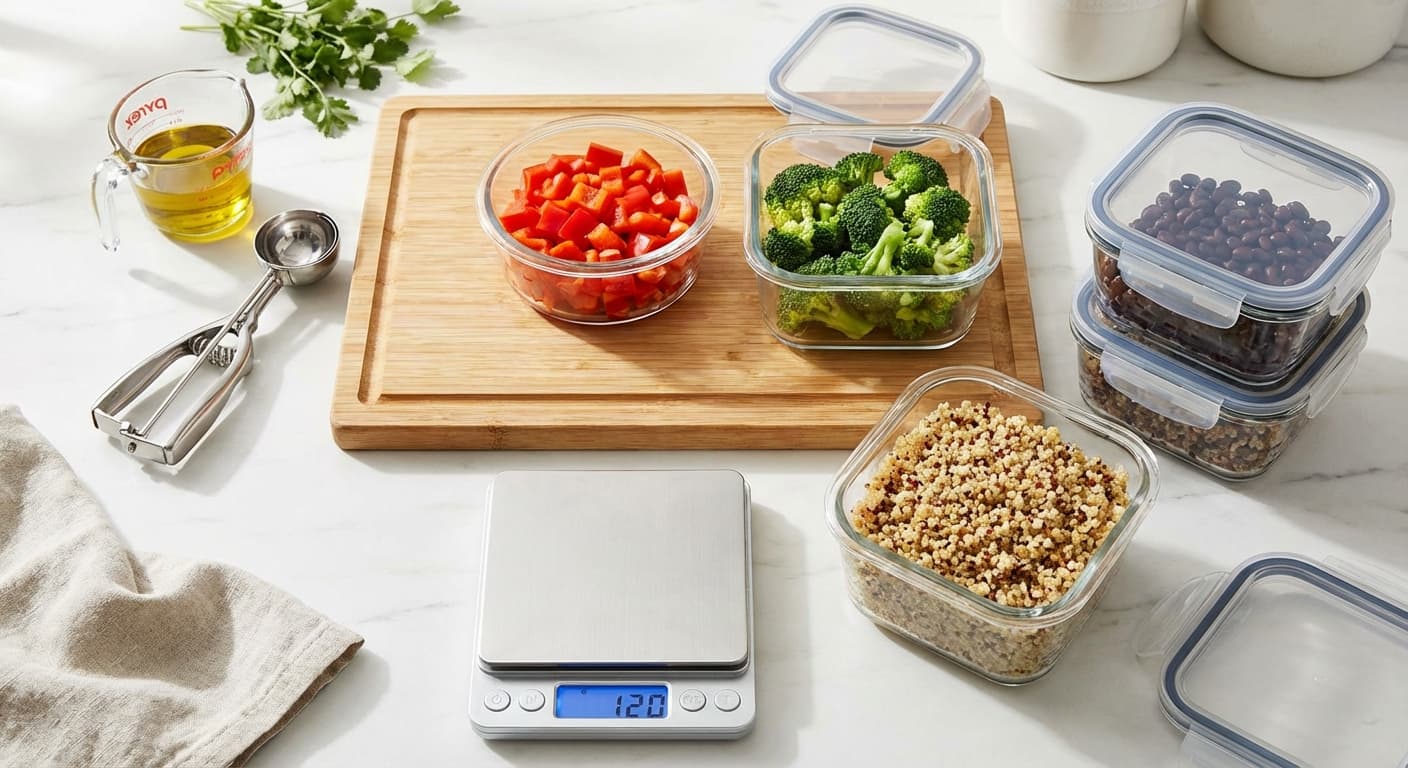
Ever scoop what you think is a generous serving of chili, only to find your partner's bowl is overflowing while yours looks a bit skimpy? Or maybe you’re meal prepping for the week and end up with a frantic puzzle of containers, trying to make six portions look (and taste) the same. If this sounds familiar, you’re not alone.
After scrolling through countless threads on Reddit’s meal prep and cooking forums, a pattern emerges: portioning is one of the biggest, most universal headaches in home cooking. It’s the silent saboteur of budgets, diets, and perfectly planned weekly menus.
But here’s the good news: it doesn't have to be a struggle. Let’s dive into the most common pain points and turn them into a streamlined, easy system. Consider this your practical guide to conquering the chaos of portion control.
The Universal Struggles: Why Is Portioning So Hard?
Before we fix the problem, let’s name it. Based on crowdsourced frustrations, here are the top culprits:
- The Inconsistent Scoop: Without a measuring tool, your eyeball is notoriously unreliable. That “serving” of pasta can easily range from one cup to three, throwing off calorie counts and meal plans.
- The Container Clutter Chaos: You have a hodgepodge of containers in different shapes and sizes. Finding matching lids and figuring out how to divide a batch of soup evenly between them is a frustrating puzzle.
- The Stickiness Factor: Foods like oatmeal, rice, and ground meat love to cling to your spoon or ladle, making it messy and difficult to transfer a clean, precise portion.
- The "Fairness" Factor: When cooking for a family or partner, ensuring everyone gets an equal amount of protein and veggies can feel like a high-stakes negotiation, especially with picky eaters or varying appetites.
- The Planning Paralysis: You want to prep lunches for the week, but the mental math of dividing a large casserole or stir-fry into five equal parts is daunting. You end up just guessing, which leads to inconsistent results.
Sound familiar? The root of the problem is usually a lack of a consistent system. Relying on guesswork and a mismatched toolkit sets you up for frustration. Let’s build your system.
Your Action Plan: 3 Systems for Perfect Portions Every Time
The key is to move from guesswork to a reliable method. Pick the one that fits your cooking style best, or mix and match!
Method 1: The "Set It and Forget It" Scoop (Best for Batch Cooking)
This is the golden rule for anyone who meal preps. The goal is to standardize your tool so your portions are always the same size.
- Your Tool: A dedicated measuring cup or a sturdy disher (ice cream scoop). For soups and stews, a ladle with a known volume (like 1/2 cup or 1 cup) is ideal. For solid foods like rice, beans, or chopped veggies, a standard dry measuring cup works perfectly.
- The Technique: The Level Scoop. For dry or sticky ingredients, use the straight edge of a spatula or knife to level off the top of your measuring cup. This ensures you're not accidentally adding an extra 20% to each portion. For wet ingredients like chili or oatmeal, fill your ladle or cup to the brim and let it settle. *Pro-Tip: Wipe the rim with a spatula before transferring to get a clean, consistent fill.
- The Hack: Create Scoop Markers. If you often cook in the same pots, use a food-safe marker to draw a line on the inside indicating your desired portion level. No more searching for the measuring cup mid-recipe!
Method 2: The Container Stacking & Sorting System (Best for Fridge & Freezer Organization)
This method solves the clutter problem by standardizing your storage. The uniformity isn't just for aesthetics; it’s for sanity.
- Invest in a Set: Purchase a complete set of stackable, uniform containers (glass or BPA-free plastic). Having containers that are all the same size and shape is a game-changer. Look for ones that come with matching lids and a compact nesting design.
- The "Assembly Line" Prep: Once your food is cooked and cooled slightly, set up your assembly line. Grab your stack of identical containers and your measuring tool (see Method 1). Fill each container one by one, to the same level. This visual consistency is incredibly satisfying and ensures everyone gets the same amount.
- Label Everything: Use masking tape and a marker or a label maker to note the contents and date. This eliminates the mystery container in the back of the fridge and makes grabbing lunch on a busy morning effortless.
Method 3: The Digital Scale (Best for Accuracy & Diet Tracking)
For those who need precision—whether for macro counting, strict dietary goals, or baking—the digital food scale is your best friend. It’s the most accurate method and removes all volume-based guesswork.
- Your Tool: A basic, inexpensive digital kitchen scale (one that can switch between grams and ounces).
- The Technique: Weigh and Divide. Place your empty meal prep container on the scale and hit the "Tare" (or "Zero") button. This negates the container's weight. Add your food until you reach your desired weight (e.g., 6 oz of chicken, 150g of roasted vegetables). For dividing an entire batch, weigh the total cooked food, decide how many portions you want (e.g., 5), and divide the total weight by 5. (e.g., 800g total / 5 portions = 160g per portion). Tare your container and weigh out each portion to 160g.
- The Mental Shift: Think in grams, not cups. You’ll be amazed at how accurate your eye becomes after just a few weeks of using a scale. It’s especially crucial for calorie-dense foods like oils, nuts, cheese, and meats.
Putting It All Together: A Sample Meal Prep Session
Let’s see these methods in action. Imagine you’re making a big batch of quinoa, black bean, and vegetable salad for five lunches.
- Cook & Cool: Cook your quinoa and veggies. Let the mixture cool to room temperature (this prevents condensation in your containers).
- Weigh the Total: Transfer the entire batch to a large bowl. Place the bowl on your scale and record the total weight (let’s say it’s 1250g).
- Calculate & Scoop: Decide on 5 portions. 1250g / 5 = 250g per portion. Grab your five identical, tared containers.
- Assemble: Using your scale, scoop 250g of the salad into each container. The scale guarantees perfect equality, even if one container is slightly wider than another.
- Label & Store: Label the lids with the date and contents. Stack them neatly in the fridge. You now have five perfectly portioned, grab-and-go lunches.
Your Portioning Toolkit Checklist
You don’t need everything. Start with what will solve your biggest pain point.
- [ ] Measuring Cups & Spoons: A basic set for dry and liquid ingredients.
- [ ] Dishers (Ice Cream Scoops): Great for scooping muffin batter, cookie dough, and even meatballs or serving rice. Look for dishers with a trigger release for clean portioning.
- [ ] A Set of Uniform Containers: Invest in a matching set with airtight lids.
- [ ] A Digital Kitchen Scale: The ultimate tool for accuracy. Prioritize one with a "Tare" function.
- [ ] A Spatula: For leveling off dry measures and scraping every last bit from bowls.
- [ ] Labels & Marker: For clear identification.
Final Encouragement
Portioning struggles are real, but they are also solvable. The goal isn’t to be rigid or restrictive, but to create a sense of ease and predictability in your kitchen. By adopting even one of these systems, you’ll save time, reduce food waste, manage your budget better, and feel more in control of your meals.
Start small. Pick your biggest frustration and choose one tool or technique to try this week. You’ve got this! What’s your go-to portioning hack? Share your wins and challenges in the comments—let’s keep learning from each other.