Protein Power: A Practical Guide to High‑Protein Meal Prep

Protein Power: A Practical Guide to High‑Protein Meal Prep
If you’ve ever stared at a blank fridge and thought, I need more protein but I don’t want to spend hours cooking, you’re in the right place. This guide blends science‑backed calculations with a kitchen‑friendly workflow so you can hit your daily protein goals, batch‑cook staples that keep well, and assemble balanced containers that make weekday eating feel effortless.
1️⃣ Calculate Your Daily Protein Target
Before you even chop a carrot, you need a number to aim for. A simple formula works for most active adults:
- Sedentary: 0.8 g per kg of body weight
- Moderately active: 1.0–1.2 g per kg
- Very active / strength‑focused: 1.3–1.6 g per kg
Example: A 70 kg (154 lb) person who lifts weights three times a week would target roughly 70 × 1.4 ≈ 98 g of protein per day. Adjust up or down based on goals (muscle gain, weight loss, maintenance).
Quick‑Calc Cheat Sheet
- Weight (kg) × Activity Factor = Daily Protein (g)
- For pounds: divide by 2.2 first.
- Round to the nearest 5 g for easy tracking.
Write that number down and keep it visible—maybe on a sticky note on your fridge or in the notes app on your phone.
2️⃣ Build a High‑Protein Pantry
When you’re prepping for a week, the staples you keep stocked determine the speed of assembly. Focus on items that store well, cook in bulk, and can be repurposed across meals.
Bulk Cooked Proteins
| Protein | Cook Method | Shelf Life | Prep Tips |
|---|---|---|---|
| Chicken breast | Roast or poach (batch 2 kg) | 4 days refrigerated, 2 months frozen | Season lightly; split into portions before freezing |
| Lean ground turkey or beef | Brown in skillet + freeze | 4 days refrigerated, 3 months frozen | Add a pinch of garlic powder, onion powder, and black pepper for flavor |
| Hard‑boiled eggs | Boil & chill | 1 week refrigerated | Peel after cooling; keep in a sealed container |
| Plant‑based beans & lentils | Cook in a large pot or Instant Pot | 5 days refrigerated, 3 months frozen | Season with cumin, smoked paprika, or a splash of soy sauce |
Tip: Cook enough for 2–3 days of meals, then freeze the rest in ½‑cup zip‑lock bags. Label with date and protein count (e.g., “150 g chicken”).
Ready‑to‑Eat Protein Add‑Ons
- Cottage cheese (½ cup) – ~14 g protein
- Greek yogurt (plain, ¾ cup) – ~18 g protein
- Edamame (½ cup, shelled) – ~9 g protein
- Shelf‑stable tuna or salmon packets – ~20 g protein per pouch
These items keep fresh in the fridge for a week or longer and can be spooned straight into containers.
3️⃣ Batch‑Cook Your High‑Protein Staples
The magic of meal prep is doing the heavy lifting once, then pulling apart the results for diverse dishes.
1. Choose a “Protein Day”
Set aside 90 minutes on a Sunday (or any day off). Follow this template:
- 0‑15 min: Preheat oven, line baking trays, fill with chicken breasts on a sheet.
- 15‑45 min: Roast chicken (≈20 min per pound at 200 °C/400 °F).
- 45‑75 min: While chicken cooks, simmer a pot of lentils and a skillet of ground turkey.
- 75‑90 min: Cool, portion, and pack.
2. Cool & Portion Quickly
- Spread hot items on a baking sheet to speed cooling (≈10 min).
- Use a kitchen scale or measuring cups to portion out 150 g chicken, 200 g cooked lentils, etc.
- Store in airtight containers or freezer bags.
3. Create a “Protein Matrix”
Think of your cooked proteins as interchangeable blocks:
- Animal block (chicken, turkey, fish)
- Legume block (lentils, black beans, chickpeas)
- Dairy block (cottage cheese, Greek yogurt)
- Egg block (hard‑boiled eggs, scrambled eggs)
You can mix‑match these blocks to hit your daily protein target without cooking fresh each night.
4️⃣ Assemble Balanced Meal‑Prep Containers
Now that you have pre‑portioned proteins, let’s build containers that feel satisfying, not just a pile of chicken.
Core Container Structure
| Section | Typical Portion | Why It Matters |
|---|---|---|
| Protein | 150‑200 g (pre‑portioned) | Hits macro goal |
| Complex Carb | ½ cup cooked quinoa, brown rice, or sweet potato | Provides energy, fiber |
| Veggies | 1‑2 cups mixed (steamed, roasted, raw) | Micronutrients, volume |
| Healthy Fat | 1 Tbsp olive oil, ¼ avocado, ¼ cup nuts | Satiety, hormone health |
| Flavor Boost | Sauce/dressing (tahini, salsa, pesto) | Prevents boredom |
Example Container (Lunch)
- Protein: 150 g baked chicken
- Carb: ½ cup cooked quinoa
- Veggies: 1 cup roasted broccoli + ½ cup shredded carrots
- Fat: 1 Tbsp almond slivers
- Sauce: 2 Tbsp lemon‑tahini dressing
Total protein ≈ 150 g (adjust based on your target).
Snack Containers
- Cottage cheese + fruit – ½ cup cottage cheese + 1 small apple
- Greek yogurt parfait – ¾ cup yogurt + ¼ cup granola + berries
All snack containers can be pre‑packed in small jars or reusable silicone cups.
5️⃣ Rotate & Refresh
Even the best prep can feel stale after a few days. Use these strategies to keep meals exciting:
- Sauce rotation: Store 3‑4 sauces (e.g., curry paste + coconut milk, chimichurri, BBQ, peanut‑ginger) in mini jars.
- Spice swap: Toss one container with smoked paprika, another with curry powder.
- Veggie remix: Keep a bag of fresh greens; add a handful to any heated container just before eating.
6️⃣ Track & Adjust
Your weekly protein goal is a guideline, not a strict law. Keep a simple log:
- Day | Target (g) | Actual (g) | Notes
- This helps you see patterns (e.g., “I’m consistently under by 20 g on Wednesdays”). Adjust portion sizes for the next week accordingly.
A quick tip: Use the MyFitnessPal or Cronometer barcode scanner to verify grams of protein in pre‑portioned packs.
Recap in Action
- Calculate your daily protein target using weight × activity factor.
- Stock your pantry with batch‑cookable proteins and shelf‑stable add‑ons.
- Batch‑cook on a dedicated day, then portion into fridge‑safe containers.
- Assemble balanced containers with protein, carb, veg, fat, and flavor.
- Rotate sauces and spices to avoid monotony.
- Track results and tweak portions weekly.
🎉 You’re Ready to Power Up
High‑protein meal prep doesn’t have to be a chore or a mystery. By following this step‑by‑step framework, you’ll spend less time wondering what to eat and more time enjoying meals that support your health and performance goals. Grab a notebook, pick a day, and start cooking—your future self will thank you.
Tags: ["high-protein", "meal-prep", "nutrition", "batch-cooking", "healthy-eating"]
ConfidenceScore: 9
Enjoyed this post?
Get weekly meal planning tips delivered to your inbox.
Comments
Related Posts
View All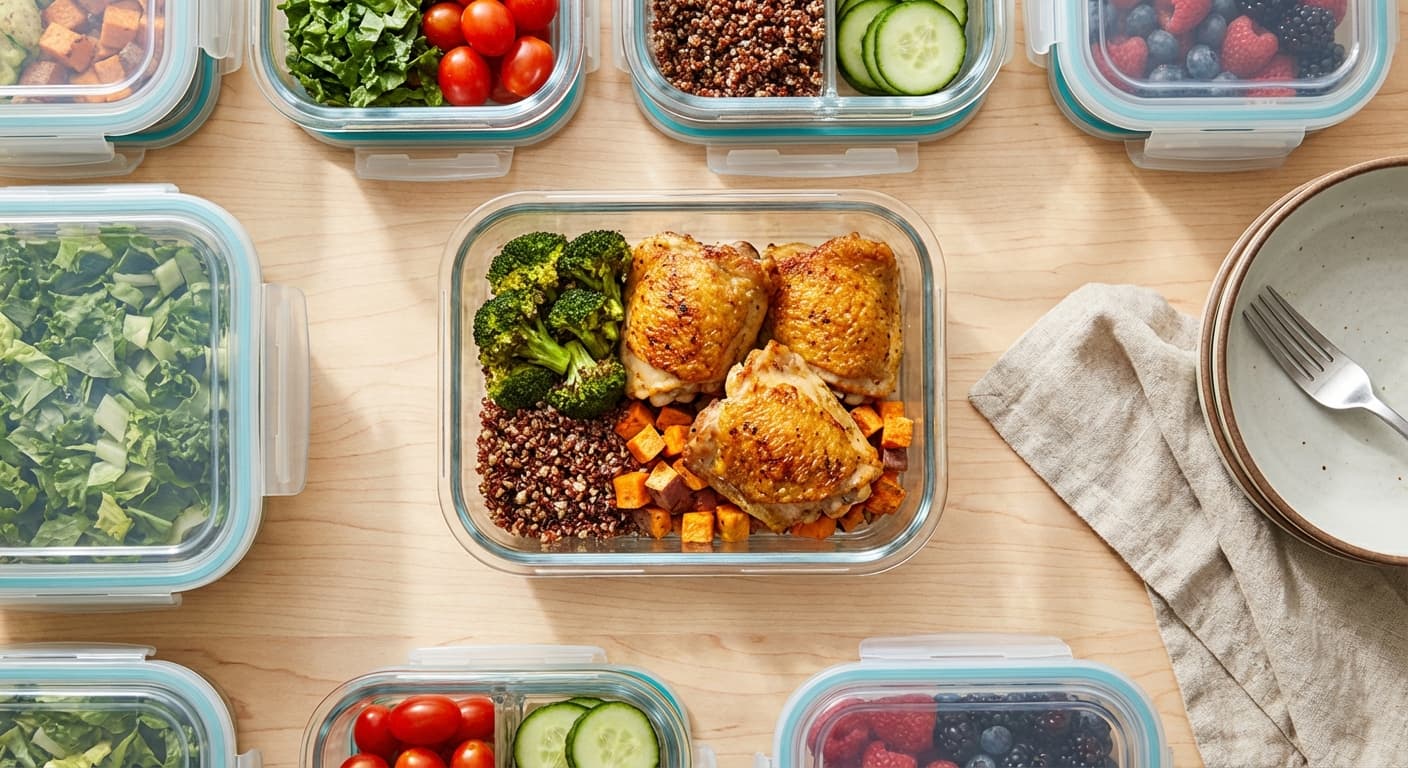
The High-Protein Budget Hero: Your Guide to Batch Cooking Air Fryer Chicken Thighs
Master the ultimate budget-friendly, high-protein meal prep with air fryer chicken thighs. In just 25 minutes, you can have perfectly crispy, juicy chicken ready for the week.

Apo(b)/Cholesterol Lowering Greek Protein Meze Power Bowl
A Greek-inspired power bowl packed with heart‑healthy ingredients that target Apo(b) and lower cholesterol.
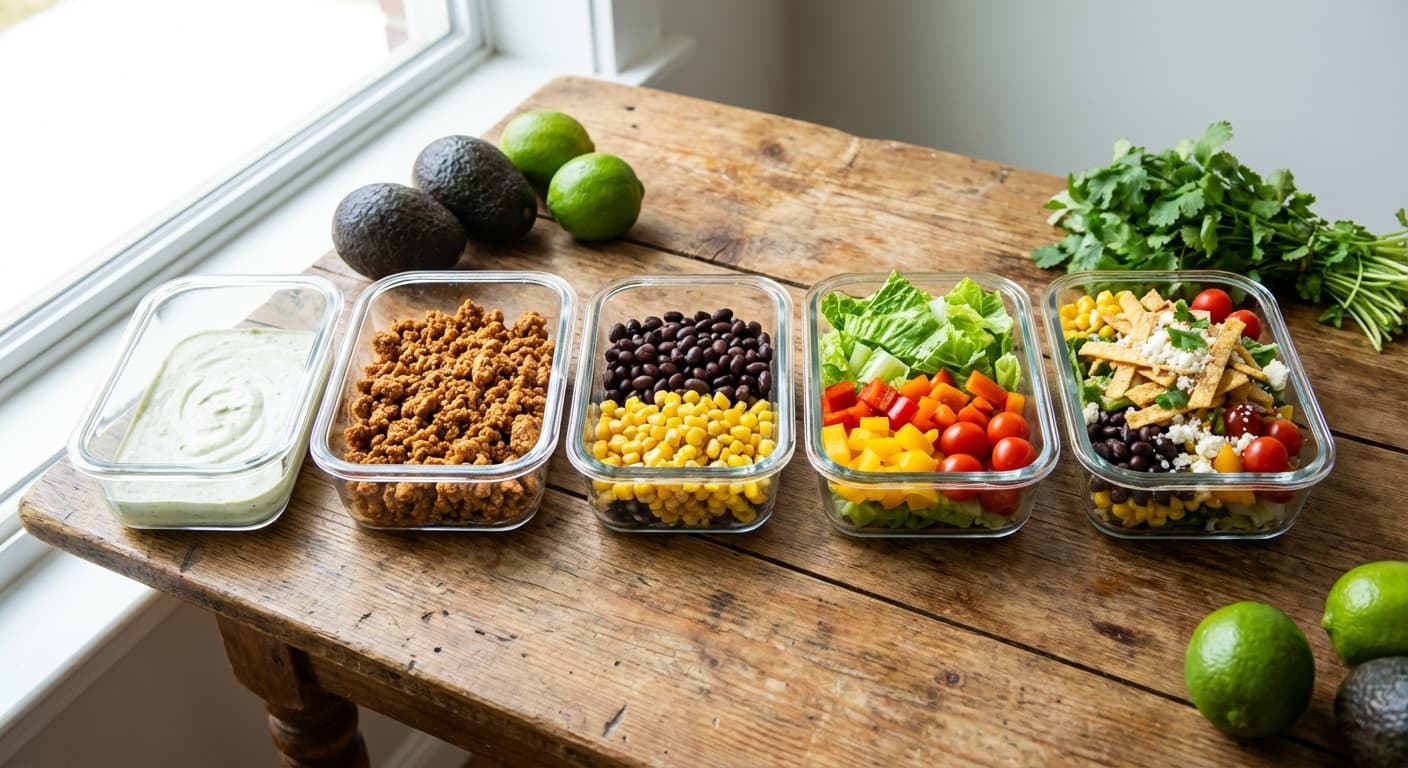
The Ultimate High-Protein Taco Salad Bowl System: 5 Days of Grab-and-Go Lunches
Build a modular, high-protein taco salad bowl system for 5 days of grab-and-go lunches. Featuring a lean protein base, crunchy elements, and a creamy lime dressing—all for under $4 per serving.